Vance mission ends without deal
Inside the failed US-Iran talks as friendly diplomacy ended in deadlock
- By Gurmehar --
- Monday, 13 Apr, 2026
The long and closely watched talks between the United States and Iran in Islamabad ended without an agreement after 21 hours of negotiations. The meeting had raised hopes across the world that tensions in the Middle East could ease, oil markets could calm down, and the Strait of Hormuz could reopen fully.
Instead, the talks ended in deadlock.
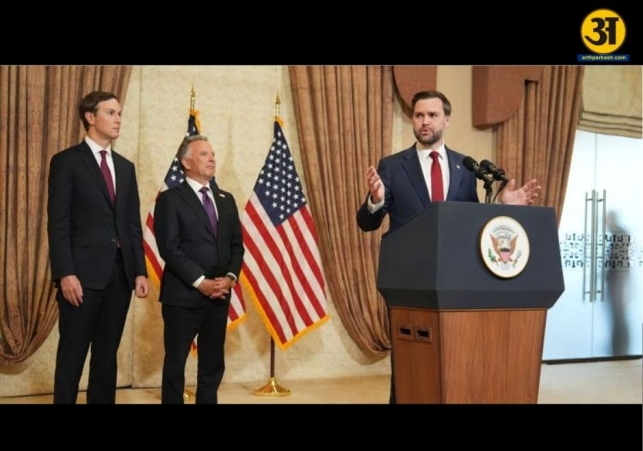
The American delegation was led by US Vice President JD Vance, making it one of the most important foreign policy missions of his time in office. Reports suggested that Vance had worked hard to build trust with Iranian negotiators and reduce decades of hostility between the two countries.
Even so, the discussions failed because both sides could not agree on major issues, especially Iran’s nuclear programme.
After the talks, Vance said the US had presented its “best and final” offer. He stated that Washington’s main demand was clear guarantees that Iran would not seek nuclear weapons.
Iran rejected the US position and said America made unreasonable demands. Iranian leaders argued that Washington needed to respect Iran’s rights and stop what they described as a controlling approach.
Soon after the collapse of the negotiations, US President Donald Trump announced a naval blockade of Iranian ports and coastal areas, adding fresh pressure on Tehran.
The failed talks show how difficult diplomacy remains between two countries that have distrusted each other for decades.
How talks became warmer
Before the meeting, many analysts believed the chances of progress were better than usual because JD Vance was leading the American side.
Reports from US media said Vance understood the history of mistrust between the two nations and tried to create a more direct and respectful line of communication.
Sources reportedly said the US delegation developed a warmer relationship with Iranian negotiators during the talks.
President Trump also commented publicly that discussions became “very friendly” toward the end.
This suggested that personal communication between negotiators had improved, which is often an important part of peace talks.
Friendly talks do not always mean an agreement is near, but they can help reduce tension and open space for compromise.
For 21 hours, both sides reportedly discussed security concerns, sanctions, shipping routes, and nuclear issues.
The Strait of Hormuz was also believed to be a major topic. This waterway is one of the world’s most important oil shipping routes, and any disruption there affects global fuel prices.
Observers hoped that if both countries could agree on shipping security and de-escalation, it would reduce pressure across the region.
However, despite better communication, the most difficult political issues remained unresolved.
Experts often note that diplomacy depends not only on friendly meetings but also on whether leaders at home are willing to make concessions.
In this case, neither side appeared ready to move enough on core demands.
That is why the talks, despite a softer tone, ended without success.
ALSO READ: Putin announces 32-hour ceasefire in Russia-Ukraine war for Orthodox Easter
ALSO READ: Pakistan assures full security for US delegation ahead of Iran talks in Islamabad
Nuclear issue remains central
The biggest point of disagreement was Iran’s nuclear programme.
For years, Iran has said its nuclear activities are for peaceful civilian purposes such as energy, medicine, and research.
The United States and several allies have long argued that Iran could use the programme to develop nuclear weapons capability.
This dispute has caused sanctions, threats, and repeated crises over many years.
After the Islamabad talks failed, JD Vance said the US needed an “affirmative commitment” that Iran would not seek nuclear weapons and would not seek tools that could quickly produce one.
He did not reveal full details of the negotiations, saying sensitive matters should remain private.
Iran, on the other hand, signalled that it would not accept demands that it considered unfair or harmful to national sovereignty.
This gap appears to have been too large to bridge.
Soon after the talks ended, President Trump increased pressure by announcing a naval blockade of Iranian ports beginning Monday.
Such a move could raise tensions further and affect trade in the region.
Oil markets reacted quickly because investors worry that any wider conflict could disrupt energy supplies.
Many countries, including India, watch these developments closely because higher crude oil prices can raise transport costs and inflation.
Even though the talks failed, diplomacy may not be completely over.
Countries often return to negotiations after pressure builds or when economic costs rise.
Back-channel communication through mediators may also continue quietly.
For now, however, relations between Washington and Tehran remain tense.
The Islamabad meeting showed that better personal relations between negotiators can help create hope, but hope alone is not enough.
When national security issues, nuclear policy, sanctions, and regional power struggles are involved, agreements become much harder.
The world will now watch to see whether both sides return to dialogue or move toward deeper confrontation in the weeks ahead.
Related News